For decades, oil and gas training was built on a simple model: choose a discipline, learn it deeply, and spend years refining it on the job. That model is breaking apart, and the force breaking it is natural gas. The rise of onshore and offshore gas as the industry’s growth engine has changed what employers need from new workers, how fast they need them, and which skills actually transfer across the industry. The result is a quiet restructuring of training itself, from curriculum design to simulator investment, and the institutions that understand the cost logic behind it are the ones positioned to lead.
The Cost Structure That Drives the Change
The reshuffling starts with money. Onshore gas projects are capital-efficient by design: many wells, incremental infrastructure, and short cycles from drilling to production. That structure rewards lean crews and fast learning, because every month of training delay is a month of production lost on a project that pays back quickly. Offshore gas projects invert the logic: massive capital commitments, decade-long horizons, and crews that must be fully self-sufficient from the first day of a rotation. The cost of an unprepared worker is different in each world, and the training that serves both must be designed around both cost structures. Onshore economics punish slow ramp-up; offshore economics punish under-preparedness; and training must answer both at once.
The operating cost picture reinforces the point. Onshore operators spend heavily on drilling efficiency, completions, and automation, and they need workers who can run modern digital tools alongside traditional equipment. Offshore operators spend on integrity, logistics, and emergency preparedness, and they need workers who can function under isolation and pressure. These are different budgets, but they buy the same underlying competence: well control, drilling fundamentals, completion practice, and operational discipline. The shared core is where the training value lives, and the environment-specific layer is where the cost structures diverge.
Technology and Policy Are Accelerating the Shift
Technology is compressing the distance between the two worlds. Remote monitoring lets onshore control rooms supervise fields across hundreds of kilometers, and the same technology is now reaching offshore platforms, where topside systems report to shore-based centers. Automation is standardizing the operator’s job regardless of location, and digital twins are giving both worlds the same planning and rehearsal tools. The consequence is that the equipment a trainee studies in a simulator, the consoles, the manifolds, the alarms, is increasingly identical between land and sea, with only the surrounding scenarios differing.
Policy is pushing in the same direction. Carbon policy is favoring gas over other fossil fuels, expanding both onshore and offshore gas development, while methane regulations are tightening operations on both sides. Certification regimes are consolidating around competency-based assessment, which plays to the strength of simulator training. The onshore oil and gas industry is absorbing the same trends, with its traditional curriculum gaining automation and digital modules. Policy does not just change what is drilled; it changes who is hired and how they are trained, and the direction of travel is unmistakable.
What the Training Industry Must Do Differently
The implication for training providers is a restructuring of the curriculum around the shared foundation. The winning model is a platform that teaches well control, drilling, completion, and production fundamentals once, with scenario libraries that switch between onshore oil and gas conditions. A student rehearses a pad operation in the morning and a platform emergency in the afternoon, building the common core first and the environmental layer second. This model cuts total training time, produces workers who can move between assignments, and gives employers a workforce that flexes with project economics.
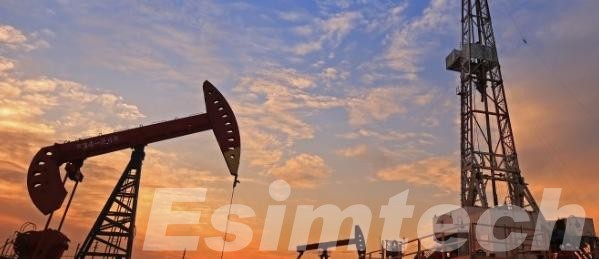 The equipment side of the restructuring is equally visible. Simulator platforms are being deployed not as a single specialty tool but as the backbone of the entire program, covering drilling, well control, completion, and increasingly the gas-specific operations of both environments. The same platform that trains a driller trains a production operator and certifies a well control candidate, which changes the economics of the training center itself: one hardware investment, many revenue streams.
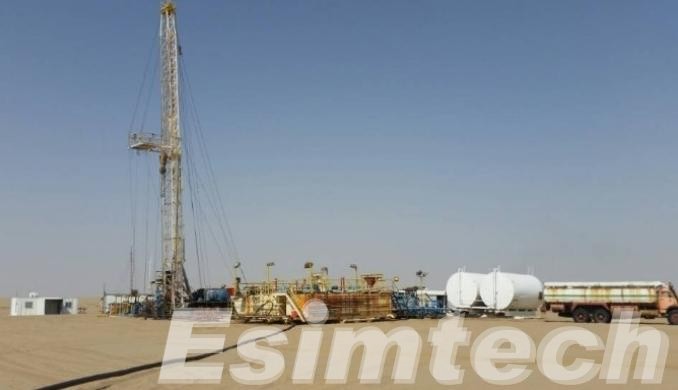 The workforce consequence is already visible in hiring patterns. Operators list flexibility as a desired trait in job postings, and graduates of unified programs report faster job placement and shorter ramp-up periods. The onshore well workover activity seen across mature basins, and the completion work on new gas wells, both draw on the same skills that the unified curriculum teaches, which is why the model is spreading from gas-specific programs into the broader onshore oil and gas curriculum.
The Long-Term Judgment for Training
Looking ahead, the restructuring has clear winners and losers. The winners are training institutions that invest in unified simulator platforms, build scenario libraries for both onshore and offshore gas, and reorganize curricula around the shared foundation. They will capture the demand from operators who need flexible workers and from students who need portable careers. The losers are programs that cling to the old split, teaching land and sea as separate tracks with separate equipment, because they will produce graduates whose skills match yesterday’s boundaries.
The judgment is not about abandoning specialization; it is about sequencing it. Specialized skills still matter, in subsea intervention, in LNG operations, in high-pressure gas handling, but they are built on a foundation that both environments share. The training organizations of the next decade will be judged by how well they build that foundation and how smoothly they layer specialization on top. The comparison guide published by Esimtech on onshore and offshore gas is a practical example of the sequencing logic, mapping what is shared and what is distinct so that curriculum designers can build the foundation first.
The bottom line is that onshore and offshore gas are not just reshaping the fuel mix; they are reshaping the labor market and the training industry that serves it. The cost structures reward flexible, fast-ramping workers; the technology makes the equipment converge; the policy makes certification portable; and the training model that ties it all together is the unified, simulator-based curriculum. Training, which for a century followed the industry’s boundaries, is now being asked to erase them, and the providers that answer that call will define the next generation of the oil and gas workforce.