When preparing artwork for embroidery, many people focus on the logo, image quality, colors, and final size. However, thread information can also play an important role. Embroidery Digitizing Services convert artwork into a stitch-based embroidery file, and knowing the intended thread details can help digitizers create a more accurate and practical design.
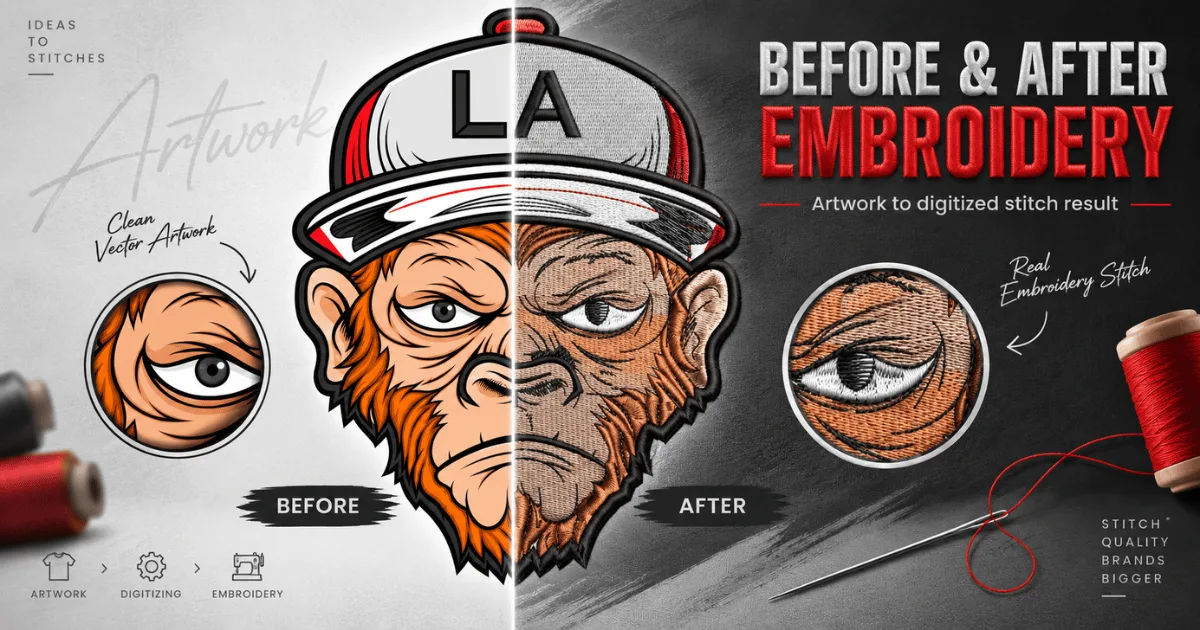
Thread details may include color, brand, thread type, weight, and sometimes specialty thread requirements. While a digitizer can often work without complete thread information, providing these details can improve color matching, stitch planning, and production consistency.
This guide explains when thread details are necessary, what information you should provide, how thread affects digitizing, and what can happen when thread specifications are missing.
What Is Embroidery Digitizing?
Embroidery digitizing is the process of converting artwork into instructions that an embroidery machine can understand.
A regular image file, such as JPG, PNG, or PDF, does not contain information about embroidery stitches. A digitizer must decide how the design will be stitched.
This includes selecting stitch types, stitch directions, densities, underlay, thread changes, and other technical settings.
The final result is usually an embroidery machine file such as DST, PES, EXP, JEF, or another format compatible with the machine being used.
Why Thread Matters During Digitizing
Thread is one of the physical materials that turns a digital embroidery plan into a real design.
Different threads behave differently. They can have variations in thickness, shine, strength, stretch, and texture.
A design that looks perfect on a computer screen may produce a different appearance when stitched with a different thread.
For this reason, experienced Embroidery Digitizing Services often ask clients about thread preferences before beginning a project.
Do Digitizing Services Always Need Thread Details?
No, thread details are not always required.
A professional digitizer can generally create an embroidery file using standard thread colors if the client does not provide specific requirements.
For example, if you submit a simple company logo with red, blue, and white elements, the digitizer can select suitable thread shades from a standard color chart.
However, this does not mean thread information is unimportant.
Providing exact thread details becomes especially useful when color accuracy, brand consistency, or production uniformity matters.
When Thread Details Are Optional
Thread details may be optional for:
- Personal embroidery projects
- Simple decorative designs
- One-time embroidery jobs
- Basic logos
- Designs where exact color matching is not important
- Small samples and prototypes
In these situations, the digitizer can usually make reasonable thread selections based on the artwork.
When Thread Details Are Important
Thread specifications become more important when:
- A corporate logo must match brand colors
- The design will be produced in large quantities
- Multiple embroidery machines will be used
- Existing garments need to match previous embroidery
- A particular thread brand is required
- Specialty threads are part of the design
- The customer has strict color requirements
For commercial embroidery, small differences in color can become noticeable when dozens or hundreds of garments are produced.
What Thread Details Should You Provide?
If you want the most accurate result, you can provide as much relevant thread information as possible.
You do not necessarily need to provide every detail for every project. The requirements depend on the design and production process.
Thread Brand
Some embroidery businesses use a specific thread brand because their machines, color charts, and production systems are built around it.
Popular embroidery thread manufacturers offer extensive color ranges.
If your project needs to match an existing product or company branding, provide the thread brand whenever possible.
This gives the digitizer a clearer reference for selecting colors.
Thread Color
Color is usually the most important thread detail.
Instead of simply saying "dark blue," you can provide a specific thread color number from a recognized thread chart.
A color code gives the digitizer a more precise target.
However, it is important to remember that digital screens display colors differently. The shade on your monitor may not exactly match the physical thread.
Thread Type
Different types of thread are designed for different applications.
Common options include:
- Rayon thread
- Polyester thread
- Cotton thread
- Metallic thread
- Wool or wool-blend thread
- Specialty decorative threads
The thread type can influence the appearance and performance of the embroidery.
For example, rayon is often appreciated for its smooth and shiny appearance, while polyester is commonly chosen for durability and resistance to repeated washing.
Thread Weight
Thread weight describes the thickness or fineness of the thread.
A different thread weight can change how the embroidery looks and behaves.
Thicker thread can create a heavier visual effect, while finer thread can be useful for smaller details.
The digitizer may need to adjust stitch settings when working with different thread weights.
How Thread Affects Stitch Density
Stitch density refers to how closely stitches are placed within an embroidered area.
The correct density depends on several factors, including fabric, design size, stitch type, and thread.
Using inappropriate density can create problems.
Too many stitches may make the design stiff, bulky, or difficult to sew. It can also cause thread buildup and increase production time.
Too few stitches can leave fabric showing through the design.
Experienced Embroidery Digitizing Services consider these factors when creating stitch files.
Thread Thickness and Density
Thread thickness can affect how much coverage a particular number of stitches provides.
A thicker thread may cover an area differently from a finer thread.
Therefore, digitizers should not treat every thread as if it behaves exactly the same way.
When a client specifies a particular thread, the digitizer can account for its characteristics while planning the design.
How Thread Affects Color Matching
Color matching is one of the biggest reasons clients provide thread details.
Suppose a business has a specific brand color. The artwork may contain a digital color value, but the embroidery machine uses physical thread.
There is no guarantee that a random thread shade will perfectly reproduce the digital artwork.
Brand Colors and Embroidery
Companies that use embroidery for uniforms, caps, jackets, bags, and promotional products usually want consistent branding.
A thread chart can help translate a digital brand color into an available embroidery thread shade.
The closest available thread may not be mathematically identical to the original digital color, but it can provide a practical physical match.
What Happens If You Do Not Provide Thread Details?
Usually, nothing goes wrong immediately.
The digitizer will often choose suitable thread colors based on the artwork.
However, the result may differ from what you expected.
Possible Color Differences
The biggest issue is often color variation.
A client may expect a particular shade of green, but the digitizer may select another green that looks similar on screen.
This difference may become more obvious after embroidery.
Production Inconsistency
If different production runs use different thread charts, the same logo could appear slightly different from one batch to another.
This can be a concern for businesses that need consistent uniforms or branded merchandise.
Extra Revision Work
If the customer does not specify thread colors and dislikes the selected shades later, revisions may be necessary.
Providing thread information early can reduce unnecessary back-and-forth.
Can Digitizers Convert Digital Colors Into Thread Colors?
Yes.
Digitizers can use the colors in your artwork as a reference and select corresponding thread shades.
This is common when customers do not have physical thread specifications.
However, digital-to-thread conversion is an approximation.
A computer screen produces color using light, while embroidery thread reflects physical light. These are fundamentally different ways of displaying color.
Why Screen Colors Can Be Misleading
Brightness, monitor settings, display technology, and lighting conditions can all affect how a color appears.
Two people may look at the same digital artwork on different screens and see slightly different shades.
For important branding projects, a physical thread chart or specific thread code is a better reference.
Do Specialty Threads Require More Information?
Yes.
Specialty threads often require additional consideration during digitizing.
Metallic threads, glow-in-the-dark threads, reflective threads, and other decorative options may behave differently from standard embroidery thread.
Metallic Thread
Metallic thread can create an attractive reflective appearance.
However, it may be more delicate or challenging to sew than standard thread.
The digitizer may need to consider stitch length, density, speed, and design complexity.
Reflective and Specialty Threads
Reflective threads may be selected for visibility or decorative effects.
Other specialty threads may have unusual textures or finishes.
When using these materials, the digitizer should know what product is being used so the design can be planned appropriately.
Does Fabric Matter More Than Thread?
Thread is important, but it is only one part of successful embroidery.
Fabric also has a major effect on how the design should be digitized.
A design intended for a lightweight T-shirt may need different settings from the same design intended for a heavy jacket.
Common Fabric Considerations
Digitizers may consider:
- Fabric thickness
- Stretch
- Texture
- Stability
- Knit or woven construction
- Garment structure
- Backing requirements
Thread and fabric work together.
A stitch plan that performs well on one material may require adjustment for another.
Why the Embroidery Machine Matters
The embroidery machine can also influence production.
Different machines may support different file formats, needle configurations, and thread systems.
Some businesses use specific thread brands and color libraries.
Before sending a design to Embroidery Digitizing Services, it is useful to tell the digitizer what embroidery machine will be used.
This can help ensure that the final file is appropriate for production.
Should You Provide a Thread Chart?
If you have access to a thread chart, providing it can be very helpful.
A thread chart gives the digitizer a physical or standardized reference for available colors.
For businesses with established embroidery production, this can improve consistency.
What to Include With the Artwork
For a professional project, consider providing:
- Original artwork
- Desired embroidery size
- Garment or fabric type
- Preferred thread brand
- Thread color codes
- Embroidery machine or file format
- Any specialty thread requirements
- Reference images when appropriate
You do not have to provide all of these for a simple project, but more information generally gives the digitizer better production guidance.
How Professional Digitizers Handle Missing Thread Information
Professional digitizers understand that many customers do not know technical embroidery specifications.
If you only have a logo and an image, you can still request digitizing.
The digitizer can normally make suitable technical decisions based on the available information.
They may select a standard thread palette and provide a color list with the finished design.
This is one reason experienced Embroidery Digitizing Services are valuable. They handle the technical conversion between artwork and machine-readable embroidery instructions.
Communication Is Important
Good communication can prevent misunderstandings.
If exact color matching matters, say so before production begins.
If you are comfortable with approximate colors, make that clear as well.
A short conversation about thread can save time and reduce revisions later.
Thread Details for Corporate Logos
Corporate embroidery projects deserve special attention.
A company may use the same logo across websites, business cards, uniforms, packaging, and promotional materials.
The embroidery version may not reproduce every tiny detail of the original logo, but its colors should remain visually consistent.
Establishing a Standard
Businesses that order embroidery regularly should establish a standard thread palette.
For example, the company can document:
- Thread manufacturer
- Color numbers
- Logo dimensions
- Preferred fabrics
- Backing type
- Approved embroidery files
This creates a repeatable production system.
When a new supplier or digitizer receives the project, they have clear specifications to follow.
Should Thread Details Be Included in the Digitizing File?
The embroidery file itself generally contains stitch instructions rather than a complete physical inventory of thread specifications.
Depending on the file format and software, color information may be represented within the file.
However, a separate thread chart or color list can still be useful for production.
This helps the embroidery operator identify which physical threads should be loaded into the machine.
How to Choose the Right Thread Information
If you are unsure what information to provide, start with the basics.
Give the digitizer your artwork and explain where the embroidery will be used.
Then mention whether color accuracy is important.
If you have a specific thread brand or color code, provide it.
If you do not, ask the digitizer to select appropriate thread colors.
This simple approach works for many embroidery projects.
Questions to Ask Embroidery Digitizing Services
Before ordering, consider asking:
Can You Match My Thread Colors?
This is important when exact branding is required.
Which Thread Brands Do You Support?
Some digitizers work regularly with particular thread systems.
Can You Work From a Thread Color Code?
A professional service should be able to use available color references where applicable.
Will You Provide a Thread Color List?
A color list can help during machine setup and future production.
Can You Adjust the Design for Specialty Thread?
If you want metallic or another specialty thread, confirm this before digitizing.
Best Practices for Providing Thread Details
A few simple practices can make the process easier.
First, avoid relying only on a screenshot of a color.
Screenshots are useful references but may not provide precise physical color information.
Second, provide exact thread codes whenever possible.
Third, tell the digitizer if the embroidery must match an existing product.
Fourth, mention the fabric and garment type.
Finally, request a sample stitch-out when color and appearance are especially important.
A physical sample provides a much more realistic representation of the final embroidery than a computer preview.
Final Thoughts
So, do Embroidery Digitizing Services need thread details? Not always, but thread information can be extremely useful when accuracy and consistency matter.
For simple embroidery projects, a digitizer can usually select appropriate thread colors from standard palettes. You can submit your artwork and allow the professional to make technical decisions.
For corporate logos, large production orders, uniforms, branded merchandise, and specialty embroidery, providing thread details is much more valuable.
Information such as thread brand, color code, thread type, and weight can help the digitizer make better decisions about stitch coverage, color selection, and overall production.
The most important point is communication. If you have exact thread requirements, provide them before digitizing begins. If you do not have those details, explain your expectations and let the digitizer recommend suitable options.
A well-prepared embroidery project considers more than just the artwork. Fabric, machine type, design size, stitch structure, backing, and thread all contribute to the final result.
By giving Embroidery Digitizing Services the right information at the beginning, you can reduce revisions, improve color consistency, and create embroidery that looks professional when it moves from the computer screen to the actual garment.
Conclusion
Thread details are not an absolute requirement for every embroidery digitizing project, but they can make a significant difference in professional production.
A skilled digitizer can work with limited information, especially when the design is simple and exact color matching is not essential. However, detailed thread specifications provide a stronger foundation when precision is important.
For the best results, provide your artwork, desired size, fabric information, thread brand, and thread color codes whenever available. If you are uncertain about any technical requirement, ask the digitizer for recommendations rather than guessing.
Ultimately, successful embroidery comes from coordinating artwork, thread, fabric, machine settings, and stitch design. When these elements are planned together, the finished embroidery is more likely to be durable, attractive, and consistent.